
Location:
Webinar / International
Welcome to the “OPC Day 2024 – International” – for the fifth time as a digital event.
The OPC Foundation will host the digital event from June 17-21, 2024 with 3 hours per day.
Each session will be held twice in different time zones to serve Americas, Europe and Asia.
- Europe/Asia slot: 08:00am – 11:00am CEST
- Americas / Europe slot: 09:00am – 12:00pm PDT | 6:00pm – 9:00pm CEST
Welcome to the “OPC Day 2026 – International” – for the seventh time as a digital event.
The OPC Foundation will host the digital event from May 18-21, 2026.
Welcome to the “OPC Day 2026 – International” – for the seventh time as a digital event.
The OPC Foundation will host the digital event from May 18-22, 2026.
Agenda
- Details follow
Call for paper
Registration
EUROPE / ASIA
Please use this registration for the daily Europe / Asia slot
08:00 am – 11:00 am CEST
AMERICA / EUROPE
Please use this registration for the daily Americas / Europe slot
09:00 am – 12:00 pm PDT | 6:00 pm – 9:00 pm CEST
Agenda
Day 1 (May 18)

1.2 | 08:40 – 09:10
Scaling Hot Data : An OPC UA Aggregator Use Case at Renault
I fully agree with the presentation’s two main takeaways. For the Renault segment, I will highlight the OPC UA Aggregator’s critical role in scaling our real-time operations. Unlocking hot at scale is a major priority for the coming years, and this aggregator is what makes it possible.
The second point is equally crucial. The main differentiator of this aggregator – which we co-developed with Systerel – is that it actually replicates the address space of the aggregated servers.
At first glance, this architectural choice might seem counterintuitive or inefficient. Why not just use a standard passthrough like most OPC UA aggregators do? The reality is all about resilience. A passthrough model exposes local servers to client overload, which can disrupt critical cold data collection.
By replicating the address space, end clients query the aggregator directly. This acts as a shield, completely preserving the performance and functionality of the underlying servers. Three years ago, when we evaluated market vendors, almost none offered this replication logic. That’s exactly why we decided to build it ourselves.

Yuhan CHEN,
AUTOMATION DATA ARCHITECT, Renault Group
1.3 | 09:10 – 09:30
Success Story: 6.5 Million Data Points – A Platform for Austria’s Road Infrastructure with evon XAMControl
How do you integrate millions of data points from tunnels, road facilities, and technical systems into a single, centrally controllable platform? In our project for ASFiNAG, we demonstrate exactly how this is achieved.
In this session, we provide insight into how we efficiently integrate all of Austria’s tunnel and road infrastructure into our evon XAMControl software platform via OPC UA. To achieve this, we developed our own ASFiNAG OPC UA specifications to establish a uniform standard for functionality and visualization.
In addition, we’ll outline the decision-making process behind selecting suitable communication protocols and explain the key reasons why OPC UA was ultimately chosen as the future-proof communication foundation.
Discover how standardization, structured integration, and modern communication technology are taking the control of critical infrastructure to a whole new level.

Daniel Seewald,
evon
1.4 | 09:30 – 09:50
EVA SmartLink – Connecting the Future of Unattended Retail
The vending and unattended retail industry is entering a new era.
European Vending and Coffee Service Association (EVA) SmartLink introduces an open, secure and future-proof communication standard designed by the industry, for the industry. Discover how interoperability, plug-and-play integration and OPC UA technology can reduce complexity, accelerate innovation and unlock new business opportunities. From manufacturers to customers, SmartLink creates a smarter and more connected ecosystem.

Erwin Wetzel,
Director General of European Vending & Coffee Service Association (EVA)
1.5 | 09:50 – 10:10
Moneytime: Bridging the Gap Between Shop-Floor Data and Enterprise ROI
While Industry 4.0 has successfully digitized physical assets through OPC UA, a critical financial blind spot remains between shop-floor events and their economic meaning. This presentation introduces the PPROI Framework and the concept of Moneytime, treating Capital Employed not as a static accounting value, but as a time-dependent variable linked to industrial process events. Based on microphase-level modeling, the approach applies a Financial Semantic Layer to transform raw machine and process data into real-time financial insight across assets, operations, and production lines. The session will show how inactivity, utilization, and hidden capital losses can be made visible within a Financial Digital Twin – and outlines how this concept could evolve toward an OPC UA Companion Specification for Financial Semantics.
Mika Vlastislav,
PPROI

Marcel Matějka,
PPROI
1.6 | 10:10 – 10:30
OPC Foundation offering open-source solutions for the EU Digital Battery Passport
The Digital Battery Passport becomes mandatory in the EU in less than a year. In this talk, you learn about the Digital Battery Passport and the state of implementations. Since multiple implementations exists while the technical specification is not finalized, OPC Foundation’s Joint Working Group for Battery Solutions created the first Digital Battery Passport interoperability specifications to make different solution work together, based on the CENCENELEC JTC24 specification. The demonstration shows the automatic creation of Digital Battery Passports modelled with OPC UA and the flow of information from production but also during the live cycle and its integration to existing infrastructures.

Dr. Arno Schmetz,
Fraunhofer FFB Münster

Lisa Angold,
Fraunhofer FFB Münster
5.1 | 17:00 – 18:00
How the OPC Foundation Started
Exclusive Interviews with the Founding Leadership of the OPC Foundation

David Rehbein,
(Emerson, retired),
First President of the OPC Foundation from 1996–1998

Reinhold Achatz,
(Siemens, retired),
First Vice President of the OPC Foundation from 1996–2012
Day 2 (May 19)
2.1 | 08:00 –08:20
Certificate Lifecycle Management with Enterprise PKI and OPC UA GDS
As industrial systems become increasingly connected to enterprise IT, cloud platforms and IIoT ecosystems, securing machine identities is essential. Public Key Infrastructure (PKI) provides the foundation for trusted communication, but managing certificates at scale in OT environments is complex. This presentation explores how automated certificate lifecycle management using OPC UA Global Discovery Server (GDS) enables secure, scalable operations, and how OT PKI can be integrated with enterprise PKI systems.

Gerald Richter,
ECOS Technology GmbH
Matthias Damm,
Unified Automation
Operational technology (OT) environments are undergoing rapid transformation as industrial systems become increasingly connected to enterprise IT networks, cloud platforms and Industrial Internet of Things (IIoT) ecosystems. While this connectivity enables advanced use cases such as predictive maintenance, remote operations and data-driven optimisation, it also significantly expands the cyber attack surface.
A fundamental requirement for securing these environments is the establishment of trusted identities for machines, applications and services. Public Key Infrastructure (PKI) provides the cryptographic foundation for this trust by issuing digital certificates that enable authentication, encryption and data integrity. These certificates ensure that communication partners can be reliably verified before sensitive operational data is exchanged.
However, deploying PKI in OT environments presents unique challenges. Industrial systems often consist of large, heterogeneous device fleets with long lifecycles, limited connectivity and strict availability requirements. As a result, traditional manual approaches to certificate management are not scalable.
Automated certificate lifecycle management is therefore a key enabler for secure and efficient OT operations. It allows organisations to provision, renew and revoke certificates at scale while enforcing consistent security policies across distributed environments.
This presentation explores how certificate automation can be realised in industrial systems. It outlines the security mechanisms of OPC UA, explains the role of the Global Discovery Server (GDS) in enabling automated certificate lifecycle management, and demonstrates how OT PKI infrastructures can be integrated with enterprise PKI solutions to meet both operational and regulatory requirements.
2.2 | 08:20 –08:40
Ensuring Authenticity with OPC UA
With growing security awareness, innovative concepts for trust-based device integration are highly important.
This presentation will examine how OPC UA provides a solution to ensure the verification of a device’s authenticity and its seamless commissioning, making it manageable for maintenance technicians. Furthermore, a comprehensive overview of the vital roles and processes across the device’s lifecycle will be provided.

Nils Baur,
Siemens
2.3 | 08:40 –09:00 | Empowering OPC UA by Formal Semantics and Knowledge Graphs
OPC UA, the de facto foundation of the industrial data ecosystem, is now taking its next step: Formal Semantics.
With the restart of the OPC UA Semantic Validation Workgroup, the focus shifts toward making meaning explicit, machine‑verifiable, and interoperable beyond traditional system boundaries.
By building a bridge from OPC UA to the Semantic Web, we immediately unlock proven technologies such as Web Ontology Language (OWL) for logical constraints, SHapes Constraint Language (SHACL) for validation, and a query language (SPARQL). This bridge does more than validate models: It connects OPC UA to a global ecosystem of ontologies and knowledge graphs, enabling cross‑domain reasoning, integration with external knowledge, and new levels of interoperability.
This session introduces the foundations of Semantic Web and demonstrates its relevance for OPC UA. We will show how machine instances can be validated and how to semantically guard Companion Specifications through their lifecycle.

Dr. Marcel Wagner,
Intel
2.3 | 08:40 –09:00
Early Detection, Reliable Integration: Verifying OPC UA Information Models with CTT Lite
This session introduces CTT Lite, a tool for validating both OPC UA Information Models and the instantiated objects of an implementation. By checking structural and semantic correctness, it helps vendors and system integrators detect issues early and ensures consistent quality verification for any Information Model released by the OPC Foundation, even as specifications evolve.
With a strong focus on usability, CTT Lite requires only minimal connection input while hiding test complexity behind a streamlined workflow. It supports quality assurance across the entire project lifecycle — from prototyping and implementation to system testing and final commissioning — reducing integration risk and increasing conformance confidence. Built on the OPC Foundation’s UA Compliance Test Tool, it benefits from proven features such as CI integration, custom extensions, and a continuously evolving compliance testing framework.

Alexander Allmendinger,
OPC Foundation
2.4 | 09:00 –09:20
OPC Foundation Field Initiative: Status and overview
The OPC Foundation Field Initiative is extend OPC UA to the field level and to meet the diverse requirements of industrial automation including real-time, functional safety, instrumentation, motion control and remote I/O. Peter is providing a status update of goals, milestones and working groups.

Peter Lutz,
OPC Foundation
2.5 | 09:20 –09:40
Yokogawa’s OPC-UA Certification for Open Process Automation
Yokogawa’s Open Process Automation Server
Is Now OPC UA certified with the OPC -001 Profile
Listen to Mark and learn about
- O-PAS reference architecture and key interfaces
- O-PAS connectivity framework (OCF)
- Key findings from pilots and test environments

Mark Hammer,
Yokogawa
2.6 | 09:40 –10:00
OPC Foundation Cloud Initiative – Updates
Learn about the updated Reference Architecture, the open-source reference solution for the EU Digital Product Passport, what the components of the open-source solution are, how the solution integrates both static and dynamic data, how the solution streams production and product usage data in the solution, how the solution integrates into dataspaces and the OPC Foundation’s Cloud Initiative and where to find it on GitHub.

Erich Barnstedt,
Microsoft
2.7 | 10:00 –10:20
Dataspaces for Manufacturers and Machine Builders: Enabling Trusted, Sovereign Data Sharing
Manufacturers and machine builders are under growing pressure to share data securely across complex, multi-partner value chains. Dataspaces offer a decentralized, policy-driven approach that enables trusted collaboration without losing control over sensitive data. They support seamless interoperability across suppliers, OEMs, and customers—while aligning with evolving EU regulations and digital sovereignty goals. From machine data to product footprints, dataspaces unlock new opportunities for efficiency, innovation, and data-driven services. Join this session to explore how dataspaces turn industrial data into a scalable, strategic asset.

Dr. Holger Kenn,
VDMA
Erich Barnstedt,
Microsoft
2.8 | 10:20 –10:40
AI Loves Python, Python Loves OPC UA
Artificial Intelligence (AI) and computer vision workloads are overwhelmingly developed in Python; not for raw execution speed, but because Python serves as an expressive orchestration layer on top of highly optimized C++ and Fortran implementations.
The new o6\Python OPC UA SDK embraces and extends this paradigm. By providing a Pythonic interface on top of the high-performance open62541 C stack, it enables efficient, low-overhead integration between AI pipelines and OPC UA-based industrial communication. The result is a seamless bridge between data-driven intelligence and real-time industrial systems.
A second dimension of “AI Loves Python, Python Loves OPC UA” emerges with the rise of Large Language Model (LLM) coding agents. These systems exhibit significantly stronger capabilities in Python than in C/C++. Combined with the rich type hints of o6\Python, they can generate comprehensive, correct, and maintainable OPC UA applications, thereby unlocking new levels of automation productivity in industrial software engineering.
Third, MCP-based architectures based on o6\Python enable ad-hoc question answering against dynamic OPC UA information models. This allows AI systems to interactively explore, query, and reason over live industrial data sources in a flexible and context-aware manner.
This talk demonstrates how aligning AI, Python, and OPC UA –augmented by LLMs and MCP – based interaction patterns-creates a powerful technology stack for intelligent industrial applications.

Day 3 (May 20)
3.1 | 08:00 –08:20
OPC UA for Machinery: The Backbone of Industrial Interoperability Explained
OPC UA for Machinery is widely recognized as the most important companion specification for the mechanical engineering industry, serving as the foundation for a rapidly growing ecosystem of standardized machine communication. At this year’s OPC Day International, join us for an insightful session where we bring clarity to this evolving landscape and introduce the new OPC UA for Machinery Whitepaper (OPC 40000).
What to expect:
- A clear and engaging overview of the OPC UA for Machinery ecosystem.
- Insight into the powerful Building Block concept – the key to scalable and reusable solutions.
- Practical guidance on how to apply and extend OPC UA for Machinery effectively.
- A first look at implementation support, including namespaces and a comprehensive blueprint nodeset.
Why attend?
Whether you are designing machines, integrating systems, or shaping digital strategies, this session will show you how to leverage OPC UA for Machinery as a true enabler for Industrie 4.0 – reducing complexity, accelerating integration, and unlocking seamless interoperability across vendors and domains.

Dr. Wolfgang Mahnke,
Unified Automation

Heiko Herden,
VDMA
3.2 | 08:20 –08:40
LoRaWAN to OPC UA – Reference Architecture and Case Study
This presentation is about a vendor-neutral architecture integrating LoRaWAN-based LPWAN sensor networks with OPC UA. It addresses challenges such as heterogeneous payloads, cloud-managed networks, and missing semantic standards. A data processing layer decodes, enriches, and maps raw sensor data into structured OPC UA information models. The solution supports OPC UA Companion Specifications and custom extensions for cross-industry applicability. MQTT integration enables both ingestion of external IoT data into OPC UA and OPC UA PubSub over MQTT. This ensures scalable, cloud-ready data exchange while preserving OPC UA semantics end-to-end. The architecture enables unified access to heterogeneous sensor data through a consistent interface. Optional analytics integration allows AI/ML-based insights such as anomaly detection and predictive metrics. Use cases include process industry applications leveraging PA-DIM® for standardized sensor representation. The approach provides a scalable, flexible pathway for integrating LPWAN data into industrial digital ecosystems.

Michael Heider,
Head of Engineering, WIKA Alexander Wiegand SE & Co.
3.3 | 08:40 –09:00
Integrating OPC UA Companion Specs into PLC by Beckhoff
Demonstration of the workflow from importing the OPC UA information model as a nodeset to a fully operational PLC integration, including validation with an OPC UA client. This covers address space customization, data access, and live method calls at runtime.

Julian Thielemann,
Beckhoff
3.4 | 09:00 –09:20
Integrating OPC UA Companion Specs into PLC by CODESYS
As the market-leading, vendor-independent IEC 61131-3 platform, CODESYS implements OPC UA as a component within the PLC runtime system. Compatible discrete PLCs from more than 500 manufacturers, as well as native CODESYS soft PLCs, come equipped with this feature as standard. Information models can be flexibly loaded and utilized within this framework. The presentation will include a live demonstration – using the AutoID model – of how easy the application is to use.

Adrian Scholl,
CODESYS Group

3.5 | 09:20 –09:40
Integrating OPC UA Companion Specs into PLC by Honeywell
Learn, how to load and integrate OPC UA Information models into the Honeywell PLC controller

Kevin StrozYk,
Honeywell
3.6 | 09:40 –10:00
Integrating OPC UA Companion Specs into PLC by Mitsubishi Electric
This live demonstration presents scalable engineering of OPC UA Information Models on Mitsubishi Electric PLCs — from straightforward PLCopen-based variable exposure to the instantiation of a structured Information Model and its binding to PLC variables.

Anja Mrosowski,
Mitsubishi Electric Group
3.7 | 10:00 –10:20
Integrating OPC UA Companion Specs into PLC by Schneider
The session features a live demonstration of integrating an OPC UA Companion Specification – using the Weihenstephan Standard as an example – directly into a motion controller during runtime. It illustrates how various OPC UA Companion Specs can be efficiently embedded to enable interoperable and standardized data exchange directly at the control level.

Ulrich Rösch,
Schneider-Electric
3.8 | 10:20 –10:40
Integrating OPC UA Companion Specs into PLC by Siemens
Siemens shows how to create an OPC UA Information model with SiOME: go from Companion Specification to functional OPC UA interface in just a few clicks!

Jan Dusold,
Siemens
3.9 | 10:40 –11:00
Metrics with the Model Compiler
Metrics can be used to analyze and compare models. In a current research project, metrics have been elicited and applied to many of the Companion Specifications. This case study presents the metrics tool, that is based on the model compiler. As an example of the metrics implemented to date, the record holders in a few metrics are presented. Findings in the CS models that may be interesting for the OPC UA modelling community are presented.

Tonja Neuner,
University of Stuttgart, ISW
Day 4 (May 21)
4.1 | 08:00 –08:20
A new OPC UA Digital Twin framework and its show cases on OpenAtom competition including OPC UA WebAPI and AAS
After the release of the OPC UA WebAPI specification in 2024, we demonstrated this new standard by integrating it with existing OPC UA Servers at the OpenAtom Competition 2024. To further explore its potential, we contributed a Digital Twin Framework based on the OPC UA WebAPI standard on GitHub, including corresponding SDK and Tool Kits. Built upon the OPC UA Meta model and adopting the Asset Administration Shell (AAS) concept, this framework extends the OPC UA ecosystem from industrial devices to IT systems and the cloud, covering BOM, work orders, industrial knowledge bases, and more.
In the 2nd OpenAtom Competition held at the end of 2025, our teams successfully validated the concept and roadmap of this OPC UA Digital Twin Framework. We believe this represents a milestone and plays a fundamental role in supporting key areas such as industrial ontology and industrial AI.

Ding Yan,
System Architect, Hollysys Group
4.2 | 08:20 –08:40
OPC UA Application Hierarchies: Addressing Architectural Challenges in Industrial Automation
The transformation of the traditional automation pyramid to “everything-with-everything” connectivity facilitated by OPC UA creates great opportunities, but also poses some challenges in the machinery landscape. This presentation introduces a whitepaper outlining these challenges, the technological options offered by OPC UA and recommendations and trade-offs for various scenarios and key actors. Particular emphasis is placed on the conflict between security-relevant isolation of systems and the free flow of potentially large amounts of data.

Dr.-Ing. Peter Waszkewitz,
Bosch
4.3 | 08:40 –09:00
Implementing Unified Namespace with an Aggregating OPC UA Server
Open Platform Communications Unified Architecture (OPC UA, IEC 62541) is a leading industrial automation framework that enables secure, standardized communication between applications used in process monitoring, production control, and manufacturing execution.
Unified Namespace (UNS) is a growing concept for enterprise-wide data management using a centralized, hierarchical structure. Since no official UNS standard exists, implementations vary by company. UNS is often built within an MQTT broker, though this approach has known limitations.
This presentation explains how an aggregating OPC UA server can provide a more advanced UNS implementation. While OPC UA is commonly viewed only as a communication protocol for device data, its information modelling capabilities support both hierarchical and non-hierarchical relationships between devices, assets, and measurements. This allows OPC UA to overcome many limitations of MQTT-based UNS implementations.
Pyry Gronholm,
ProSys OPC

Jouni Aro,
ProSys OPC

Ismo Leszczynsk,
ProSys OPC
4.4 | 09:00 –09:20
Deeply Embedded OPC UA: Strategies for Full NS0 and Encryption on a $1 Microcontroller
Historically, OPC UA was perceived as resource-hungry compared to other communication frameworks such as Modbus and MQTT. We show this is not the case. OPC UA has a history on embedded devices. Different from previous efforts with feature-constrained implementations, we present strategies for a full OPC UA Server (NS0-Full, DI, encryption) on a $1 microcontroller, using less than 100 kB RAM. This opens new markets for OPC UA, including small sensors, smart building components, and even consumer devices.

Andreas Ebner,
o6 Automation
4.5 | 09:20 –09:40
From logistics to the European Green Deal – nothing works without automatic and unique object recognition! The AutoID industry has relied on OPC UA for more than 10 years.
AIDC technologies are among the core technologies required for automated manufacturing, the development of modern logistics systems, and the implementation of the European Green Deal. This makes the standardized, easy integration of these technologies –independent of specific technologies and manufacturers – all the more important. More than 10 years ago, the AIM Association and the OPC Foundation therefore developed a corresponding OPC UA Companion Specification. The need for standardized availability of basic information and technologies has not diminished since then. AIM has therefore recently contributed to standardizing the mapping of object coordinates using OPC UA semantics – it may sound trivial, but it is important.

Olaf Wilmsmeier,
Wilmsmeier Solutions
4.6 | 09:40 –10:00
From Automatic Asset Onboarding to AI-Orchestrated Manufacturing: An SDM Testbed for Industrial Deployment
This presentation is about an industrial testbed that repositions OPC UA as a foundation for AI-orchestrated manufacturing within Software-Defined Manufacturing (SDM). Moving beyond traditional data integration, OPC UA is used as a semantic backbone for capability-driven production coordination. The system enables automatic onboarding of assets across a pharmaceutical bottle production line in under five minutes, without PLC upgrades. Digital twins are seamlessly created by linking OPC UA companion specifications with Web of Things (WoT) interfaces.
This allows interoperable, reusable capability exposure across heterogeneous multi-vendor equipment. The architecture introduces AI-based orchestration using a MAGS (Multi-Agent Generative AI Systems) middleware layer. Machines expose capabilities via digital twins, enabling dynamic and autonomous production coordination. The implementation validates low-latency control APIs and automated semantic alignment across industrial models. It supports rapid production reconfiguration and service-oriented manufacturing approaches. Aligned with the OPC UA Cloud Reference Architecture, the solution enables scalable, multi-site AI-driven manufacturing.
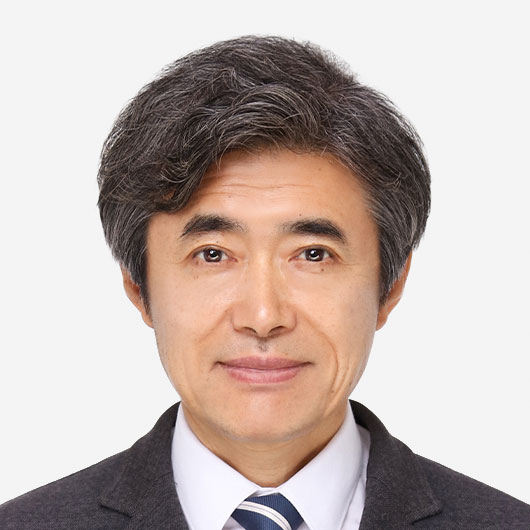
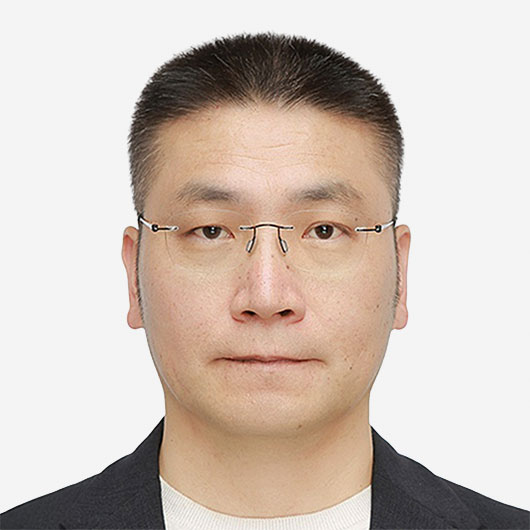
Myungseok Park,
CEO of HSSOFT Co., Ltd

Registration
EUROPE / ASIA
Please use this registration for the daily Europe / Asia slot
08:00 am – 11:00 am CEST
AMERICA / EUROPE
Please use this registration for the daily Americas / Europe slot
09:00 am – 12:00 pm PDT | 6:00 pm – 9:00 pm CEST
This Conference is taking place on Thursday April 20th, 11:00 -13:00
CET adressing OPC UA with Metaverse, Dataspaces and Asset Administration shell.
Join our conference at the Convention Center –
Room 3B
- live demonstrator OPC UA and the Metaverse
- live demo “OPC UA over MQTT” connecting lot of controllers via OPC UA over MQTT directly to cloud dashboards
- OPC UA via REST: get information about new working group adressing
The IT world desires to utilize the data from the OT space to be combined with additional concepts like Asset Administration Shell, Data Spaces, Digital Twins and Metaverse: All these initiatives and solutions are about sharing information between multiple companies with different use cases like product lifecycle data (AAS) or governance data (DataSpaces) etc. In most cases, they exchange the data via proprietary or standardized HTTP REST-Interfaces. - OPC UA for field: live demo of horizontal Controller-to-Controller communications based on OPC UA FX series – the one and only harmonized OPC UA solution for both Process- and Factory-Automation, including deterministic, motion, instrumentation, OPC UA Safety and OPC UA over 5G.
- live demo “GDS – Global Discovery Service” for secured exchange of certificates
These companies and partners will show solutions on the OPC Foundation booth in 2023:
- Brightly Works Oy
- Fraunhofer IOSB
- Hilscher
- logiccloud AG
- Matrikon
- Prosys OPC
- PTC/ Kepware
- Siemens
- Unified Automation
In addition we welcome our partners
- AutomationML
- FDT Group
- Spectaris with the LADS Companion Spec