
Location:
Webinar / International
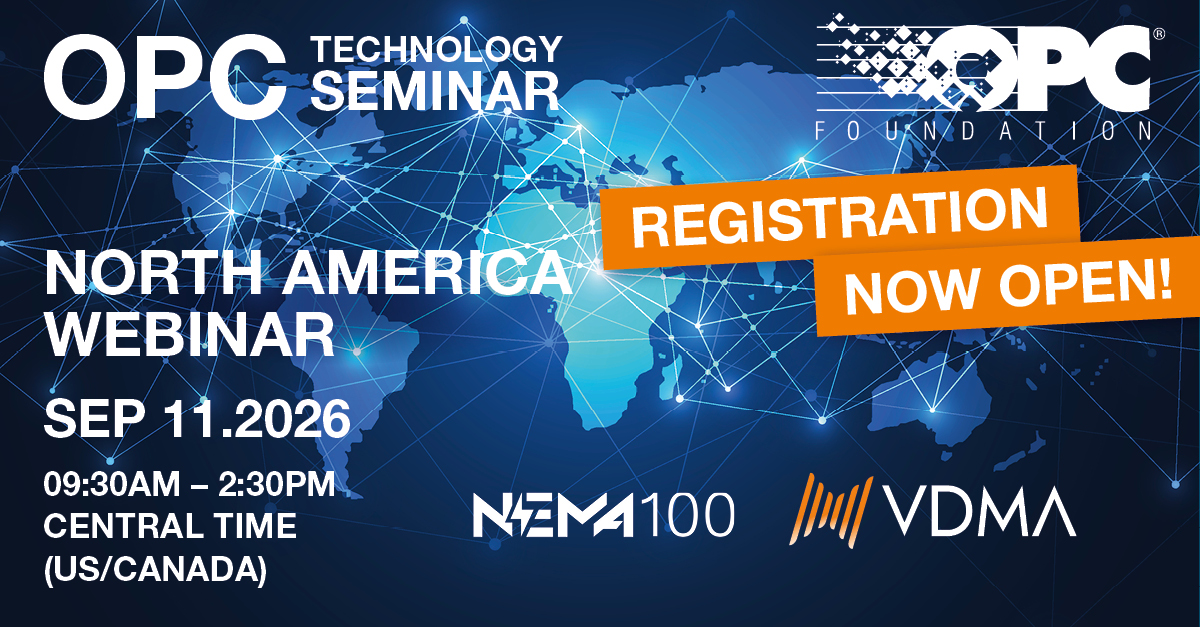
Welcome to the “OPC Day 2024 – International” – for the fifth time as a digital event.
The OPC Foundation will host the digital event from June 17-21, 2024 with 3 hours per day.
Each session will be held twice in different time zones to serve Americas, Europe and Asia.
- Europe/Asia slot: 08:00am – 11:00am CEST
- Americas / Europe slot: 09:00am – 12:00pm PDT | 6:00pm – 9:00pm CEST
Join this Technology Webinar Central Time (US/Canada):
Welcome to the “OPC Day 2026 – International” – for the seventh time as a digital event.
The OPC Foundation will host the digital event from May 18-22, 2026.
Agenda
- Details follow
Call for paper
Registration
EUROPE / ASIA
Please use this registration for the daily Europe / Asia slot
08:00 am – 11:00 am CEST
AMERICA / EUROPE
Please use this registration for the daily Americas / Europe slot
09:00 am – 12:00 pm PDT | 6:00 pm – 9:00 pm CEST
Agenda
09:30am – 09:45am
Opening and Welcome
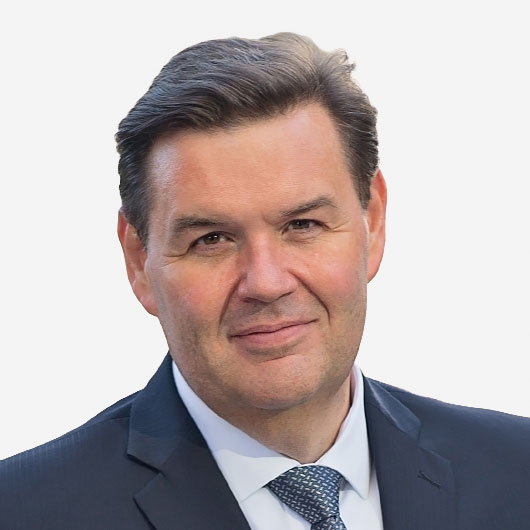
Director OPC Foundation North America
09:45am – 10:30am
OPC UA: The Foundation for Industrial Digitalization
How secure, semantic interoperability is enabling digital transformation, AI, digital twins, and connected value chains worldwide
Industrial Digitalization is reshaping manufacturing, energy, infrastructure, and process industries across the globe. At the heart of this transformation is OPC UA, providing the secure and semantic interoperability needed to connect assets, systems, companies, and ecosystems. From the shop floor to the cloud, OPC UA enables digital twins, AI-driven applications, and trusted data sharing across the entire lifecycle.
This keynote will highlight emerging trends, global success stories, and the next generation of industrial digitalization initiatives.
Discover why OPC UA has become the trusted foundation for a digital and sustainable industrial future.
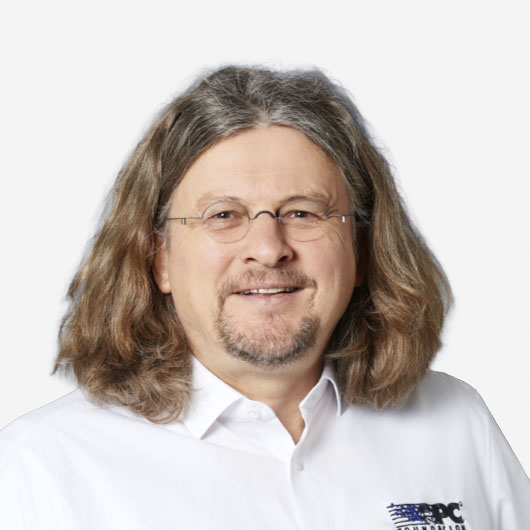
Stefan Hoppe,
President OPC Foundation
10:30am – 11:10am
Navigate off Insecure-by-Design Protocols and Products Using Open Standards
In an age where OT threats are actively targeting PLCs, defense in depth is more important than ever for stopping a threat actor. Secure protocols are the foundation of trust that simplify cybersecurity across the operational network. Many industrial protocols have secure variants, but organizations need to intentionally choose the secure option.
This talk unpacks real-world vulnerabilities that exploited organizations failing to upgrade their protocols and products in tandem with their environments. You will learn:
- The Obligation: Why Secure-by-Design products are essential to modern defense strategies.
- Key Capabilities: What specific hardware and software features to demand from vendors.
- Actionable Resources: Where to access frameworks and tools to drive secure-by-demand deployments across your enterprise.

Matthew Rogers,
ICS Cybersecurity Engineer, Cybersecurity and Infrastructure Security Agency (CISA)
11:10am – 11:40am
Beyond Connectivity: Standardizing Electrical Asset Semantics with NEMA & OPC UA
True interoperability requires moving past basic connectivity and focusing on the semantics of our data. Join Zack Valdez as he discusses how NEMA and the OPC Foundation are collaborating to standardize information models for electrical equipment, bridging the gap between factory floor assets and broader industrial ecosystems. Don’t miss this strategic session, which challenges the industry to pinpoint exactly where the gaps in companion specifications exist today for electro-industry products.

Zack Valdez,
Senior Director, Smart Manufacturing and Industrial Policy, NEMA
11:40am – 12:20pm
Adopting Open Ecosystems for Software Defined Automation
This presentation explores strategic positioning and operational deployment for software-defined, open automation ecosystems. It highlights how lightweight REST interfaces like I3X complement established standards such as Open Process Automation (OPA) and OPC UA, creating unified frameworks that prioritize interoperability, cybersecurity, and streamlined data access without redundant storage. On an operational level, it compares hardware retrofitting – adding edge gateways or PLCs to existing assets to boost intelligence – against full-stack equipment replacement, addressing the technical, financial, and organizational friction between plant-floor agility and enterprise CapEx preferences.

Michael Hotaling,
Executive Advisor – Technology Scouting, ExxonMobil
12:20pm – 12:50pm
The Software-Defined Edge: Unlocking OPC UA FX over TSN, 5G, and Ethernet-APL
As production environments shift toward highly connected, software-defined architectures, establishing deterministic interoperability from the controller to the field is critical. Join Peter Lutz as he breaks down how OPC UA Field eXchange (FX) extends the OPC UA framework to deliver standardized information modeling and secure, real-time communication. Attendees will walk away with practical insights into integrating OPC UA FX with modern networking tech like TSN, 5G, and Ethernet-APL to build truly future-ready industrial systems.

Peter Lutz,
Field Level Communications Director, OPC Foundation
12:50pm – 1:10pm
Interoperability Blueprint: Success Stories of How 7 Global Leaders Scaled with OPC UA
Behind every successful digital transformation is a foundation of seamless interoperability. In this session, Michael Clark delivers real-world case studies from seven global industrial leaders who transformed their operations using OPC UA. Learn how deliberate technical planning enabled these companies to start small, scale rapidly, and eliminate data silos across their entire automation architecture – providing a practical blueprint for your own OT/IT journey.
Michael Clark,
Director OPC Foundation North America
1:10pm – 1:40pm
Speaking the Same Language: Standardizing Global Value Chains with VDMA & OPC UA
Mechanical and plant engineering is entering a new phase in which machines must not only connect, but communicate with shared meaning across global value chains. Join Andreas Faath as he explains how VDMA’s OPC UA Companion Specifications for mechanical engineering are creating a common semantic foundation for interoperable, AI-ready production data. This session explores why standardized information models are becoming essential for global industry, from scalable automation and digital twins to trusted data spaces, regulatory readiness, and emerging European requirements such as the Digital Product Passport. Discover how aligning machine data at the source reduces integration effort, strengthens investment security, and enables intelligent, future-proof value creation across the industrial ecosystem.

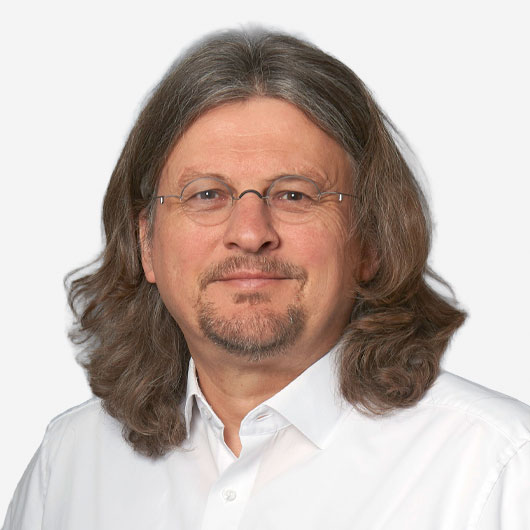
Andreas Faath,
Managing Director, VDMA
Registration
EUROPE / ASIA
Please use this registration for the daily Europe / Asia slot
08:00 am – 11:00 am CEST
AMERICA / EUROPE
Please use this registration for the daily Americas / Europe slot
09:00 am – 12:00 pm PDT | 6:00 pm – 9:00 pm CEST
This Conference is taking place on Thursday April 20th, 11:00 -13:00
CET adressing OPC UA with Metaverse, Dataspaces and Asset Administration shell.
Vita
Andreas Faath — Managing Director, VDMA MII
Andreas Faath is responsible for interoperability initiatives across the mechanical and plant engineering industry. As a board member of the Industrial Digital Twin Association (IDTA), Labs Network Industrie 4.0 (LNI 4.0), and the OPC Foundation, he actively drives the development and global adoption of key industrial standards. He is a recognized expert in interoperability, digital value creation, digital twins, and OPC UA standardization, serving as a key interface between industry, standardization bodies, and policymakers. Through close collaboration with leading machinery and plant engineering companies, he represents industry requirements and helps translate them into practical, internationally accepted standards. Leveraging VDMA’s extensive global network, he has played a significant role in establishing OPC UA as a cornerstone technology for industrial digitalization worldwide.
Prior to joining VDMA, Andreas Faath studied Mechanical and Plant Engineering and conducted research at the Technical University of Darmstadt, focusing on digitalization and the Industrial Internet of Things (IIoT). He subsequently worked in Research & Development at General Motors, where he specialized in process optimization, digitalization, and vehicle testing technologies.
Andreas Faath,
Managing Director, VDMA
Michael Clark — Director OPC Foundation North America
As the Director of OPC Foundation North America, Michael Clark continues his career-long advocacy on behalf of the automation industry as it transforms itself through IT/OT convergence into the digital era.
With over 35 years of experience in the discipline of industrial automation and controls, Mr. Clark is internationally recognized throughout the process automation sector for his expertise in Industrial Control System (ICS) fieldbus protocols. Mr. Clark is also recognized for his contributions as a principal author of the Open Process Automation Standard (O-PAS™).
As an impartial advocate for the industrial automation end-user community, Mr. Clark became the Founding Director of BusCorp Inc., a North American-based consulting firm dedicated to design, implementation, commissioning, and training in the competencies of ICS networks and fieldbus systems. He has supported industrial sectors across the globe including, refining & upgrading, chemicals, food & beverage, gas exploration, offshore production, water & waste water treatment, power generation, and nuclear remediation.
Director OPC Foundation North America
Zack Valdez — Senior Director, Smart Manufacturing and Industrial Policy, NEMA
Zack Valdez, Ph.D., is Senior Director of Smart Manufacturing and Industrial Policy at the National Electrical Manufacturers Association, where he leads work on industrial automation, advanced manufacturing, supply chains, and cross-sector technology adoption. His work focuses on helping electrical manufacturers translate emerging technologies, standards, and policy signals into practical strategies for competitiveness and resilience. Previously, Zack served at the U.S. Department of Energy’s Office of Manufacturing and Energy Supply Chains and at NIST, where he worked on manufacturing strategy, industrial policy, and public-private collaboration. He brings a systems perspective to interoperability, connecting standards, data, equipment, and deployment realities.
Zack Valdez,
Senior Director, Smart Manufacturing and Industrial Policy, NEMA
Peter Lutz — Field Level Communications Director, OPC Foundation
Peter Lutz studied electrical engineering at the University of Stuttgart with a focus on computer science. He then worked as a research assistant at the Institute for Control Engineering of Machine Tools and Manufacturing Facilities (ISW) at the University of Stuttgart in the field of open control systems and industrial communication systems. Afterwards, he was appointed managing director of the Sercos user group, responsible for the coordination of worldwide activities for the automation bus Sercos and active in different national and international standardization committees. Since April 2019 he has been managing the OPC Foundation’s Field Level Communications (FLC) Initiative with the goal of extending OPC UA for field level communications in the factory and process industries.
Peter Lutz,
Field Level Communications Director, OPC Foundation
Stefan Hoppe – President OPC Foundation
Stefan Hoppe has been President of the OPC Foundation since 2018.
Since then, he has driven the adoption of OPC UA as a key enabler of industrial digitalization across manufacturing, energy, infrastructure, and other industries worldwide. Under his leadership, OPC UA has evolved from a communication standard into a globally recognized framework for secure, semantic interoperability, interoperable digital ecosystems, and data-driven innovation.
Stefan studied Electrical Engineering at the Technical University of Dortmund, Germany. He has been with Beckhoff Automation since 1995, where he started as a software developer and later assumed leadership roles in product management, focusing on PC-based automation, connectivity, and embedded software technologies.
Stefan Hoppe,
President OPC Foundation
Michael Hotaling – Executive Advisor – Technology Scouting, ExxonMobil
Michael Hotaling is an Executive Advisor and former Operations Excellence Digital Manager at ExxonMobil, bringing over 30 years of manufacturing, operations, maintenance, and engineering experience across the energy sector.
- ExxonMobil Leadership: Served as Executive Advisor and long-time Operations Excellence Digital Manager, leading global digital strategy across Refining, Chemicals, and Midstream operations. His work spans corporate digital transformation, Operational Technology (OT) and Process Control strategies, digital solution deployment, and ICS cybersecurity.
- Operational Expertise: Held key leadership roles – including Process Manager, Technical Manager, and Maintenance Manager – at nine different ExxonMobil operating facilities across Refining, Chemicals, Lubes, and Supply/Trading units.
- Digital Transformation: Directed digital initiatives focused on visual positioning, computer vision, robotics, spatial mapping, and OT/IT convergence to streamline field maintenance and operational safety.
Michael Hotaling,
Executive Advisor – Technology Scouting, ExxonMobil
Matthew Rogers – ICS Cybersecurity Engineer, Cybersecurity and Infrastructure Security Agency (CISA)
Matthew Rogers, Ph.D., is the Industrial Control System (ICS) Cybersecurity Strategy & R&D Lead in the Office of the Technical Director at the Cybersecurity and Infrastructure Security Agency (CISA). In this role, he leads the „Secure by Design“ initiative for Operational Technology (OT), focusing on transitioning ICS research and development into practical security solutions, vendor procurement standards („Secure by Demand“), embedded controls for legacy industrial networks, and secure OT protocol communications across critical infrastructure sectors.
- CISA Leadership: Guides agency strategy for OT security and drives initiatives aimed at protecting critical manufacturing, water, and transport systems.
- Industry & Engineering Background: Worked as a founding engineer at Shift5, developing security solutions for transport and defense systems (planes, trains, and tanks). He subsequently moved to broader ICS cybersecurity efforts at MITRE and consulted on critical infrastructure security projects across multiple sectors.
- Academic Credentials: Earned his PhD in cybersecurity from the University of Oxford as a Rhodes Scholar, focusing his research on intrusion detection systems and securing legacy serial control system networks in vehicles.
Matthew Rogers,
ICS Cybersecurity Engineer, Cybersecurity and Infrastructure Security Agency (CISA)
Registration
EUROPE / ASIA
Please use this registration for the daily Europe / Asia slot
08:00 am – 11:00 am CEST
AMERICA / EUROPE
Please use this registration for the daily Americas / Europe slot
09:00 am – 12:00 pm PDT | 6:00 pm – 9:00 pm CEST